
Following the publication of the government’s National Youth Strategy, Tina Ramdeen (CLA Trustee and Associate Director, Young People, at the Roundhouse in London) sets out the headlines within the Strategy, its links to other government initiatives, and analyses the funding challenges for cultural and creative activities for young people.
On 10 December 2025 the Government launched its long-awaited National Youth Strategy: Youth Matters: Your National Youth Strategy, a 10-year plan shaped by more than 14,000 young people who contributed to the Youth Matters: State of the Nation report, highlighting the reality of growing up in England in 2025.
This is the first national youth strategy in England for more than two decades and sets out two ambitions:
- Half a million more young people to have access to a trusted adult outside of their home
- To have halved the participation gap in enriching activities between disadvantaged young people and their peers
The Strategy
The Strategy outlines ten action points across three chapters:
Chapter 1: People who care
- Action 1: Trusted Adults –Supporting more trusted adults to engage with and guide young people when and where they need it most
- Action 2: Strengthening the Workforce – Developing and growing a skilled and sustainable paid and volunteer youth sector workforce, with the highest standards to meet young people’s needs
- Action 3: Friends and Relationships – Helping young people to develop positive social connections in schools and colleges, in their communities, and online
Chapter 2: Places to go and things to do
- Action 4: Richer Lives – Providing enriching and meaningful activities for young people in and outside of education
- Action 5: Good Work – Providing better education, guidance, training, and support for young people to get a great job
- Action 6: Keeping young people safe – Intervening earlier to increase young people’s safety in communities
- Action 7: Places to go – Creating a new generation of welcoming youth spaces.
Chapter 3: Seen and heard
- Action 9: Delivering with young people – Putting young people in the driving seat of their own lives, empowering them to shape the solutions and decisions that affect them
Funding
The cross-government strategy highlights four new pots of funding, representing an investment of £500 million over the next four years:
- £350 million to refurbish or build up to 250 youth facilities through the Better Youth Spaces programme
- Over £60 million on a new Richer Young Lives Fund to improve access to enriching activities and youth work
- £15 million for youth workers, volunteers and other trusted adults to better support young people
- £70 million to rebuild and improve local youth service and establish a network of 50 Young Future Hubs
There are also links with several parallel government initiatives that aim to address challenges faced by young people, many of which were outlined in the CLA’s previous Youth Sector Policy and Funding Briefing. The new strategy specifically references the investment of £22.5 million over three years to create a better enrichment offer in up to 400 schools, and delivering £132.5 million of funding as part of the Every Child Can programme to ensure that children and young people have access to a wide range of enriching activities inside and outside of school, in partnership with the National Lottery Community Fund.
Broader funding across numerous key policies and programmes is mapped within the Strategy, which signals the complexities of the involvement of no less than 12 government departments; Department for Education; Department for Environment, Food and Rural Areas; Department for Transport; Department for Science, Innovation and Technology; Department for Work and Pensions; Department for Health and Social Care; Ministry for Housing, Communities and local Government; Home Office; Ministry of Justice; Cabinet Office; Ministry of Defence; and HM Treasury.
CLA take
Acknowledgement of the importance of young people’s access to high-quality arts, creative and cultural activities throughout the strategy is promising. There are direct links to the government response to the recent Curriculum and Assessment Review via the Enrichment Framework where ‘arts and culture’ is included as one of the five core enrichment areas, and there is recognition that this work is to be enhanced by partnerships both within and beyond the statutory curriculum.
The strategy indicates that the Government will task public bodies, including Sport England and Arts Council England, with reducing the gap in access to opportunities – focusing on giving thousands of young people in-person connections through enriching sport, art, music, and creative activities. This is encouraging: however, the absence of committed funding ringfenced for cultural and creative activities is noted, particularly in contrast to the designated funding from Sport England embedded within the strategy to enable young people’s access to local sport and physical activity.
Young people tell us loud and clear that they want to be able to take part in arts and cultural activities, and inherently see themselves as creatives, which is echoed within the aforementioned State of the Nation report. Targeted funding for high-quality creative and cultural initiatives must be embedded within the strategy to enable equitable access across the country, without this there is the risk that arts initiatives are positioned as a tool for engagement, rather than an integral and effective intervention to improve the lives of children and young people.
The National Youth Strategy provides an opportunity to raise awareness and recognition of the impact of arts and creativity on the personal, social and emotional development of young people within non-formal education settings. There is a pressing role for the cultural sector to loudly and visibly support the delivery of the 10-year plan, to firmly cement creativity within the Government’s Youth Policy.
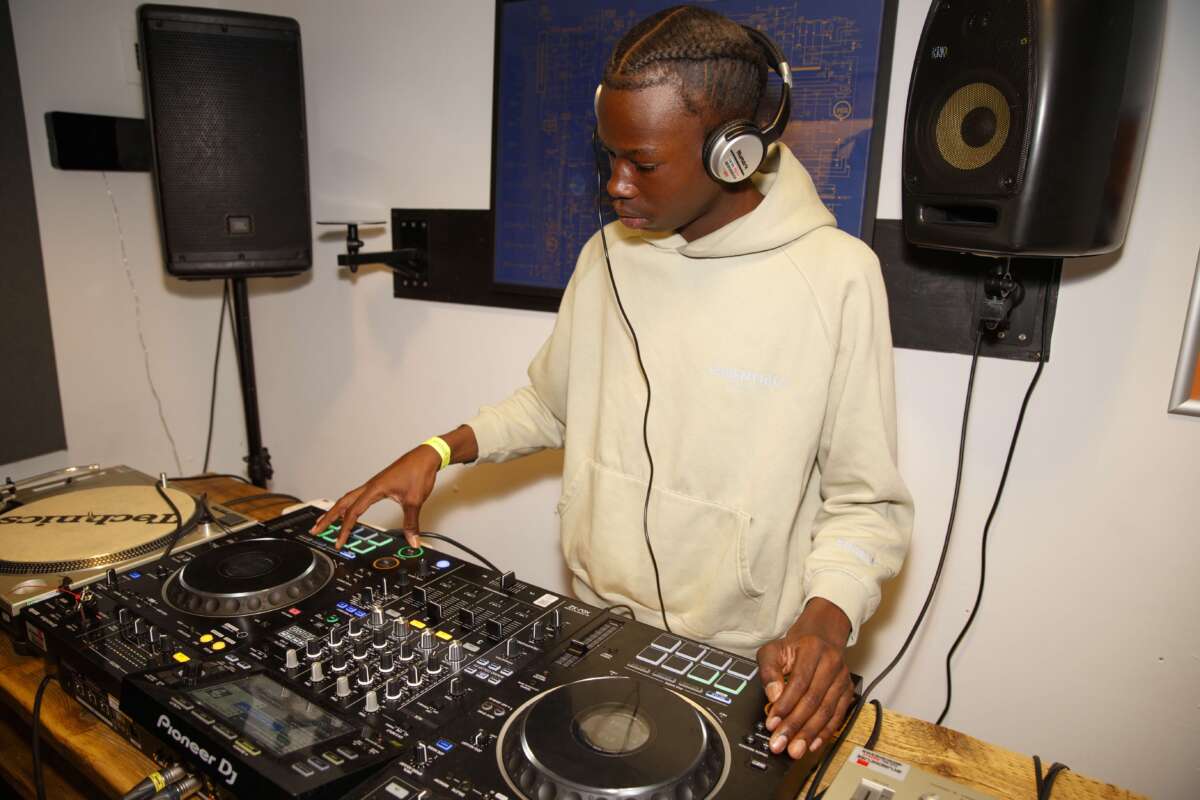
Image: Young Creatives at the Roundhouse. | Credit: Lloyd Winters.