
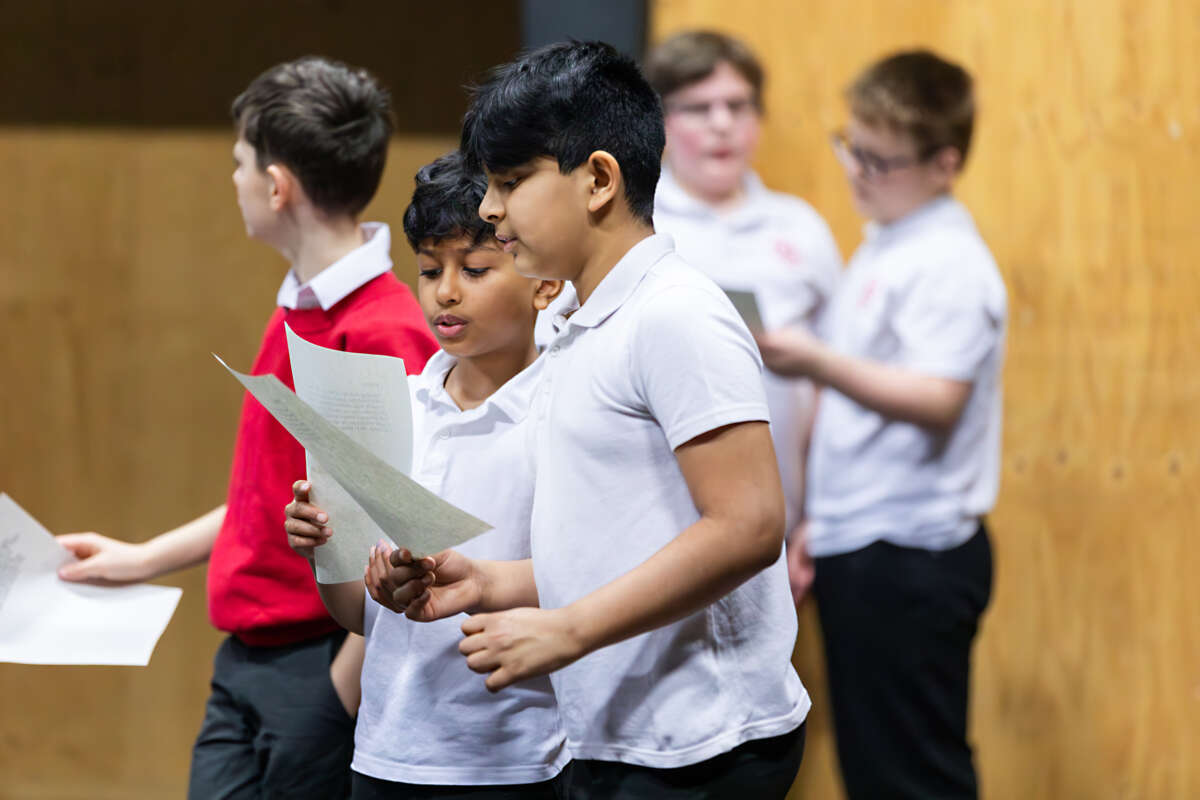
Kerry Hall, from Enrichment for All, shares why Arts and cultural experiences are vital for enrichment, and how cultural partnerships will be key in enabling schools to deliver on the new Enrichment Benchmarks.
Every teacher can relate … The child who rarely speaks suddenly finds their voice on stage. The pupil who struggles to engage in the classroom spends an hour completely absorbed in a gallery. The young person who has never thought of themselves as creative discovers a talent they didn’t know they had because an artist, musician or theatre practitioner took the time to work alongside their school.
These moments don’t happen by accident. They happen because schools and cultural organisations create opportunities for young people to experience something beyond the everyday. Too often, however, those opportunities have depended on where a child lives, which school they attend, or whether someone has the time, funding or determination to build the partnerships that make them possible.
That is why this moment matters.
The publication of the Department for Education’s Enrichment Benchmarks represents a significant shift in how we think about education. For the first time, there is a shared national expectation that every school and college should provide high-quality enrichment for children and young people from the start of Primary school right through to the end of school or college. The Benchmarks recognise five broad categories of enrichment – one of which is Arts and culture – and encourage schools and colleges to think intentionally about the breadth, quality and equity of the experiences they offer.
This is about far more than another initiative for busy school leaders. It is about recognising that enrichment is not a reward for the fortunate few or an optional extra once the “important” work is done. It is an essential part of a great education – and something every child and young person should be able to experience as they grow up.
The Benchmarks also do something else that feels just as important. They aren’t just guidance for schools and colleges; they’re a bridge between sectors. Perhaps for the first time, schools, colleges, youth organisations, cultural institutions, employers and policymakers have a common language for talking about the experiences every child should have as they grow up. That creates a powerful opportunity for collaboration.
That matters enormously for the arts and cultural sector.
For years, cultural organisations have worked alongside committed education leaders, often making the case for arts and cultural learning through improved attainment, attendance or wellbeing. Those outcomes matter. But the Enrichment Benchmarks invite us to make a bigger argument.
Arts and cultural experiences are not simply another activity or trip. They are one of the principal ways young people develop creativity, confidence, identity, empathy and a sense of belonging. They help children understand themselves, encounter different perspectives, express their ideas and imagine lives beyond their own experience. Alongside sport, social action, nature & outdoor learning and other forms of enrichment, they make a distinctive contribution to the education of the whole child.
Through the Enrichment for All coalition, more than 200 organisations from education, youth, business, sport, arts and culture have come together around a simple belief: every child deserves these opportunities. Together, we have helped shape the Enrichment Benchmarks Companion Toolkit to support schools, colleges and community organisations as they begin embedding the new expectations. Throughout that work, one lesson has emerged consistently.
Partnerships Matter
Education leaders know that enrichment matters. What many need are trusted partners who can help make it possible.
For colleagues working across museums, theatres, galleries, libraries, music organisations and the wider cultural sector, the Enrichment Benchmarks offer something equally important: a new opportunity to become long-term partners in education.
As schools and colleges begin thinking more strategically about enrichment, there is space for different conversations. Ones that move beyond individual workshops or visits, towards partnerships built around shared ambitions for young people. It invites cultural organisations to ask not simply, “What programme can we offer?” but “How can we help this school create the experiences it wants every young person to have?”
That shift – from delivering activities to building relationships – may prove to be one of the most important opportunities this new policy creates. It opens the door to partnerships shaped by local context, responsive to the interests and needs of young people, coupled with the assets cultural organisations can bring and sustain over time rather than funding cycles. It also challenges all of us to share what we are learning, so that effective practice can spread across the wider system and fewer schools have to start from scratch.
At its best, enrichment brings joy: the joy of creating, performing, discovering, belonging and contributing. That joy is not a luxury in education. It is part of what helps young people thrive.
The Enrichment Benchmarks do not guarantee that every child will experience high-quality arts and cultural learning. That will depend on the choices we make next; by schools, cultural organisations, funders, local partners and national leaders alike.
But they do give us something we have not had for many years: a shared expectation that these experiences matter for every child, not just the fortunate few.
The invitation is clear. If we are willing to build deeper partnerships, learn from one another and keep those young people who currently miss out at the heart of our efforts, this could be the beginning of a very different chapter for arts and cultural learning in this country – and a generation of children growing up with richer opportunities to belong, create and contribute.
Image – Stratford Joint Open Day at RSC. Credit Sara Beaumont for RSC