
Jacqui O’Hanlon, RSC Deputy Executive Director and Director of Creative Learning – and CLA Evidence Associate – takes a long view on considering how we learn from evidence, experimentation and collective learning, and asks how we can work together to create systems of opportunity to enable every child to access an Arts-rich education.
On 18 September, the Royal Shakespeare Company brought together teachers, young people, theatre-makers, researchers and policymakers for Building Partnerships: A 20-Year Story, a symposium celebrating two decades of sustained partnership between the RSC, schools and regional theatres across England.
The day was partly an opportunity to look back. But it also explored what 20 years of evidence, experimentation and collective learning might tell us about the future of Arts education. As Robin Belfield, one of our contributors, said, the next 20 years starts today.
We began, 20 years ago, with an ambition to transform young people’s experience of Shakespeare in school by enabling them to encounter the plays actively, physically, creatively and collaboratively – as drama. What followed became something broader and deeper. What started out as a defined and time limited partnership programme (called the Learning and Performance Network, 2006 to 2016) became a network of long-term relationships between schools, teachers, theatres, artists, researchers and young people, shaped increasingly by local leadership. This is the Associate Schools programme that started in 2016 and which we are now starting to build the next 10-year vision for with partners.
The programme connects primary, secondary and SEND schools and further education colleges in regional clusters, working with the RSC and local theatre partners. Its core principles include local leadership, teacher professional development, playmaking festivals, and talent development and leadership programmes for young people. This place-based approach sits within the context of a nationally connected community of practice, enabling schools, teachers and theatre partners to respond to the particular needs of their communities while sharing practice, learning and ideas across the country.
That idea of place ran throughout the symposium. In welcoming delegates, we talked about the need to see schools and theatres as part of our civic infrastructure. We think of infrastructure as roads, buildings and transport networks. But it’s also made up of the institutions that help us understand ourselves, each other and the world. Schools do that. Theatres do that. And when they work together, they can create opportunities that neither can provide alone.
That principle came vividly to life during lunchtime carousel sessions led by teachers and theatre partners. From Blackpool, Cornwall, York and Selby to Bradford, Hull, Nottingham, Cumbria, Newcastle, Corby, North Staffordshire and Hartlepool, colleagues shared how partnerships have evolved in response to very different communities and contexts. They explored the challenges of working in rural settings, early years practice, young people’s leadership, learning outcomes, teacher research, inclusive principles applied to performance festivals and the role cultural partnerships can play within the life of a city or town.
The morning’s opening sessions addressed the question: how can long-term cultural-education partnerships remain responsive, equitable and creative? It brought together voices from young people, education, policy, sport and theatre.
We heard from Kay Batkin, Network Director at the Youth Sport Trust (YST), the UK’s leading children’s charity for improving the education and development of every child through play and sport.
It was inspiring to hear from another sector and useful to note that the YST recently celebrated 30 years of long terms partnerships with schools (we are babies in comparison). They have a compelling narrative that explains how YST equips educators and empowers young people to create a future where every child enjoys the life-changing benefits of play and sport.
The YST set out the challenges they are seeking to address (mental health, wellbeing and fitness) and the benefits that come from their programmes (with significant percentage increases in children’s engagement, confidence and resilience). It made me reflect that this is what the Cultural Learning Alliance has been developing with and for the Arts and education sectors. A shared language we can use to define the challenges that young people face in their lives and in schools that the Arts can help address, and the tangible, transformative benefits that happen as a result.
A particular highlight at the symposium was the conversation between Geoff Barton, RSC Trustee and former General Secretary of the Association of School and College Leaders, and Schools Minister Georgia Gould. Their rapport enabled an unusually open and hopeful conversation about the place of Arts and creativity within education.
Crucially, the Minister was clear that the Arts can’t be regarded as an optional extra. As she put it during the symposium: “Arts are not just about enrichment. They need to be at the heart of the curriculum.” She argued for a broad education in which the Arts, creativity and academic standards are not positioned in opposition, and emphasised the importance of schools, Arts organisations and government working in partnership.
In own 20-year review of our partnerships, we noted that every child should have a meaningful Arts entitlement within the curriculum, with enrichment extending that entitlement rather than compensating for its absence. We also call for sustained investment in place-based cultural partnerships and a stronger national evidence base for Arts education aligned with CLA calls to action).
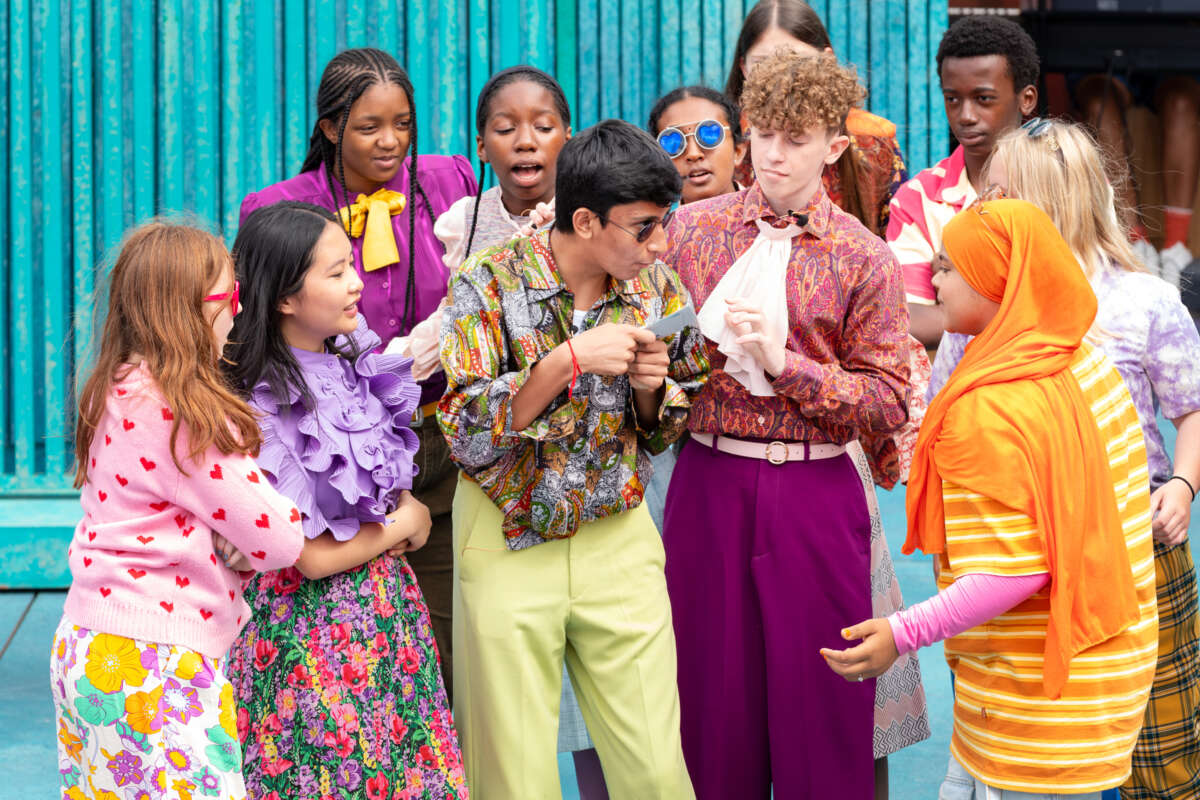
The afternoon shifted the challenge by asking: are we building partnerships that change systems, or ones that simply survive within them? At its heart was a performance of Factory, an unflinching verbatim theatre piece shaped entirely by the real-life testimonies and voices of young people, teachers, headteachers, school staff, and policymakers from across the education sector. It was created by the brilliant Lung Theatre and performed by members of the RSC’s Next Generation young company. It presented the complexities of school experiences for adults and young people and invited audiences to reflect on the ways in which imagination is ignited and why that matters.
A fundamental narrative throughout the whole symposium was that none of this work happens without teachers. It was a privilege to acknowledge the extraordinary teachers we have worked alongside over two decades: teachers willing to experiment, take creative risks, learn with us and lead change in their schools and communities. Their expertise has not simply enabled the programme. It has shaped it. The evidence gathered over 20 years reinforces that lesson: investing in teachers and creating the conditions in which they can experiment and develop their practice, is fundamental to lasting change.
Twenty years ago, we started by asking how we might change young people’s experience of Shakespeare. Today, the question is bigger: how can schools, cultural organisations, government and communities work together to create the systems of opportunity that mean every young person in every postcode has sustained access to an Arts-rich education?
The next 20 years start today …
Read the RSC report and find out more: Building Partnerships – A 20-Year Story of Arts Impact | RSC | Royal Shakespeare Company
Image – Next Generation ACT Company 2024. Credit Sara Beaumont for RSC




1 thought on “Building Partnerships: what 20 years of partnership can teach us about the next 20”
Comments are closed.