It feels like we are building up to some big announcements this autumn/winter as we await consultation on the draft national curriculum for all subjects and GCSE for some subjects; consultation on new technical qualifications; and the Milburn report – the independent UK government-commissioned review that investigates the rising number of young people not in education, employment, or training (NEET).
In the meantime, there is still much to report on, including a wealth of new evidence around the lives of children and young people from the Children’s Commissioner, the Youth Voice census, and surveys from the BBC on young people’s views on AI. We also report on an exciting moment of celebration for our sector, with the winners announced for the National Arts and Culture Awards at an awards ceremony in Manchester. In this edition we report on:
- Further reform of Ofsted to focus on school context
- The role of oracy in the curriculum
- Education Endowment Foundation research on Pupil Premium spending
- The annual report from Next Generation Assessment
- The latest Children’s Commissioner report highlighting a “state of emergency” for some children
- Findings from the Youth Voice Census 2026
- A BBC survey which identifies the skills young people want most support with
- A major new report on education and AI linked to the Human Flourishing Framework
- School workforce issues, with one third of schools considering redundancies and restructuring
- News from the new National Centre for Arts Education
- A website tracks funding and staffing issues across Higher Education
- The National Arts and Cultural Education Awards 2026
The Budget on 28 October did not focus on schools or the cultural sector. In apprenticeship news, £100m was allocated to support a local apprenticeship service to match young people with employers, funded through DWP savings. For the Arts sector, apprenticeship delivery still needs to do more accommodate small employers if it is to serve the creative workforce – look out for our upcoming Blueprint for an Arts-Rich Education which addresses apprenticeships, careers and skills in detail.
In our Latest Thinking article this month, Anna Cutler, CLA Research Associate, examines recent research from Professor Pat Thomson to consider how we might start to turn back the tide on the erosion of the Arts in schools – and identifies the crucial role of school leadership in revitalising Arts education.
In our Research Spotlight, Professor Pat Thomson, CLA’s Senior Evidence Associate, examines a study in China which investigates how out-of-school activities develop creativity and curiosity, identifying two findings that are worth consideration for the UK context.
Further reform of Ofsted to focus on school context
Speaking at a fringe event at the Labour conference in late September, Lucy Powell said that Ofsted needs a “much stronger” focus on school context in inspections and confirmed that there would be reforms to the school watchdog amid increased concern about its latest inspection framework.
In part her comments followed an investigation by the TES that revealed that schools with a higher proportion of pupils with special educational needs or disabilities were more likely to get lower grades across all of Ofsted’s main evaluation areas – including on inclusion.
In a letter to the Association of School and College Leaders (ASCL), Ms Powell said she wanted to move to an Ofsted system that recognises the context that school staff are working in. But she went further on the panel at the conference, telling delegates: “I want to see a much stronger emphasis in the current inspection system on context, much stronger than it is at the moment.”
ASCL also raised the prospect of potential strike action, saying a new grading system had become an “overbearing mess”. The Department for Education (DfE) said ministers were “working with Ofsted and school leaders to ensure accountability is fair, proportionate and focused on helping every school get better”.
ASCL’s announcement comes after another union, the National Association of Head Teachers (NAHT), said changes Ofsted made to inspections just under a year ago had been severely harmful to school leaders’ welfare.
ASCL said it had passed a motion of no confidence in “the ability of Ofsted’s leadership to address the damage being done by the new inspection system”, adding that it was “increasingly concerned about the welfare and morale of members”. Pepe Di’Iasio, general secretary, said the union did not take the step “lightly”, but added Ofsted’s “warm words about recognising wellbeing pressures … have not been matched by the action necessary” and that “negotiation [had] hit a brick wall”. “The current system is not fit for purpose. It is an overbearing mess and urgently needs to be reviewed,” he said.
You can see TES coverage here, and BBC coverage here.
CLA COMMENT
So inspection is set to change again. Inspection plays a critical role in shaping school priorities and investment decisions and impacting the status of Arts education. There are no HMIs for Dance or Drama so there is already an Arts subject parity issue with inspection – there should be champions for all Arts subjects within Ofsted. There is a need to strengthen how Arts education is understood and recognised within judgements of educational quality, and in the context of proposals for academy trusts to be inspected and judged on their civic responsibility and community engagement, particularly since there are no longer subject deep dives for ungraded inspections.
Inspection guidance and practice should provide a clear understanding of how schools are providing an Arts education that contributes to curriculum breadth, progression and quality, as well as to personal development, civic engagement and wider educational aims.
And we agree with Lucy Powell that this must happen with a clear recognition of school context. Our annual Report Cards examine Arts qualifications results in relation to ONS indices of multiple deprivation data and also in relation to ethnicity and SEND, so we can see the extent to which context impacts Arts take-up as well as wider school performance.
Oracy in the curriculum
The Education Secretary also spoke at the Confederation of School Trusts Conference on 15 October. During the speech, she shared the importance of developing oracy, and how this will be part of the curriculum following the Curriculum and Assessment Review.
Powell said that “with AI on the rise, we need to go harder on the skills that makes us human, like oracy.” She talked about the ability to articulate yourself confidently being “central to success in work and in life, but for too long it’s been a marker of privilege. Now it will become the right of every child … That’s why we’re hardwiring oracy into the revised National Curriculum. And I can announce today that I will give oracy equal status to reading and writing, as a new strand of the English curriculum”.
She said that working with school leaders and MATs, working with “Ofqual, and as part of our curriculum review, oracy will light up every classroom. Both in content and in assessment, speaking, listening and communicating will be a core part of every child’s education, from primary to GCSE and beyond. And that is the oldest form of connection we can think of, building relationships by communicating. And we’ll open up enrichment to reach all children.”
She talked about “Music, debating, the Arts, engineering and sports – a deep connection to learning for the next generation and to our communities.”
CLA COMMENT
The Curriculum and Assessment Review called for a focus on applied knowledge and critical thinking, and oracy was one of the capabilities called for, alongside financial, digital and medial literacy, as well as climate education. So, it’s good to see this being honoured by the new government.
We were told when the Review was published that when refreshing the national curriculum and GCSEs in individual subjects, the government would “identify where subject-specific disciplinary skills are not clearly described or not emphasised adequately, and ensure these are properly reflected in those subjects’ programmes of study.”
The government said then that it would create a new oracy framework to sit alongside the national curriculum for primary and an oracy, reading and writing framework for secondary.
We would stress the power of Arts subjects for oracy. Our Capabilities Framework makes clear the distinct contribution, as did the 2024 Oracy Education Commission Report, which described oracy education and Arts education as being “mutually supportive: teaching pupils to talk and listen makes an Arts education accessible; and an Arts education provides a distinctive vehicle for the provision of opportunities for pupils to engage in experiences that foster the development of their oracy skills …”
How do schools spend their Pupil Premium funding?
About the Pupil Premium
The Pupil Premium grant is additional government funding provided to publicly funded schools serving Reception to Year 11 in England to improve educational outcomes for disadvantaged pupils.
In the 2025/26 financial year, the total value of the Pupil Premium was £3.05 billion, up from over £2.9 billion the previous year and was allocated to eligible schools. Funding is allocated to each school based on the number of:
- pupils who are recorded as eligible for free school meals, or have been recorded as eligible in the past 6 years
- children previously looked after by a local authority or other state care, including children adopted from state care or equivalent from outside England and Wales.
According to this new Education Endowment Foundation (EEF) research report, schools view the Pupil Premium as an important source of funding. Around four in five schools (82%) reported that they would have to cut some forms of support they currently offered to disadvantaged pupils if they did not have Pupil Premium funding.
To ensure that the Pupil Premium is spent on effective approaches to raise the educational attainment of disadvantaged pupils, schools must spend their Pupil Premium grant on evidence-informed activities. These activities should be in line with the ‘menu of approaches’ set by the Department for Education and the EEF’s 3-tiered approach, which helps schools allocate spending across the following areas:
- Developing high-quality teaching, for example through professional development and recruitment and retention
- Providing targeted academic support, such as one-to-one or small group tuition
- Tackling non-academic barriers to academic success, such as difficulties with attendance, behaviour and social and emotional wellbeing
Each year, schools are required to publish a new or updated Pupil Premium strategy statement on their website setting out how they plan to spend the funding. This year, the analysis further builds on the existing evidence base by collating and analysing a national, large-scale sample of Pupil Premium statements covering the 2025/26 academic year, and also seeks to understand changes in planned spending over time.
Research objectives and questions
The findings of the research are intended to inform the EEF’s activities, including its guidance to schools on how to use their Pupil Premium effectively, and support policy makers to better understand how the Pupil Premium is spent. This research focused on Pupil Premium statements covering the 2024/25 academic year and addressed seven research questions:
- What challenges do schools identify for pupils eligible for the Pupil Premium? How does this vary by school characteristic?
- How does school spending align with the EEF’s tiered approach? How does this vary by school characteristic?
- Which approaches are schools funding using the Pupil Premium? How does this vary by school characteristic?
- How do schools’ approaches to spending align with their identified challenges?
- Which external programmes are schools funding with their Pupil Premium grant? How does this align with the EEF’s list of Promising Programmes? How does this vary by school characteristic?
- What types of evidence are being cited in Pupil Premium statements? How does this vary by school characteristic?
- How have the challenges schools identify for pupils eligible for the Pupil Premium, approaches to spend, and citation of evidence changed between 2024/25 and 2025/26?
Conclusions
Schools determine how to spend the Pupil Premium based on the needs of their disadvantaged pupils. The DfE has no systematic way of understanding how the Pupil Premium is spent, and therefore whether funding effectively supports the attainment of disadvantaged pupils (Committee of Public Accounts, 2025). Therefore, the aim of this EEF research was to investigate how schools report spending the Pupil Premium in 2025/26, and how this compared to the previous year.
The analysis of 1,201 statements covering 2025/26 revealed some broad trends. For example, English/literacy attainment, attendance and SEMH and wellbeing were the most commonly cited challenges for disadvantaged pupils.
They also found that the challenges and approaches to spending the Pupil Premium differed by school phase, type, and the proportion and number of pupils eligible for funding – suggesting that schools adapted their Pupil Premium spend to their different contexts. For example, there were some differences in the challenges faced by primary schools compared to secondary schools, Special Schools compared to mainstream provision, and in schools with different proportions of pupils eligible for the Pupil Premium.
Compared to the 2024/25 academic year, some challenges moved up to ranking of the most commonly cited. These included: personal circumstances (72% vs 42%), personal and social development (61% vs 24%), parental engagement with home learning (40% vs 21%), and independent learning (37% vs 18%).
Most schools allocated funds to all three tiers of the ‘menu of approaches’ set out by the EEF. However, on average there was a slight skew towards academic support and high-quality teaching compared to wider strategies. In most cases, school approaches to spending the Pupil Premium aligned with the challenges faced by disadvantaged pupils. However, there were some cases where targeted interventions were cited more often than the challenges they directly target (e.g. SEMH and wellbeing interventions, maths and numeracy interventions, and extracurricular activities and clubs). In general, approaches varied depending on school phase, size, and proportion of pupils eligible for funding.
They found that 70% of schools cited at least one external programme as a part of their approaches. However, only 9% of schools cited the Nuffield Early Language Intervention, which was the most popular programme of the EEF’s list of promising programmes.
Schools used a variety of evidence sources to support their choice of approaches, with EEF being the most popular. This was followed by the use of the schools’ own data and DfE evidence. In some cases, the use of evidence also varied by school. For example, Special Schools were less likely than mainstream schools to cite the EEF and DfE as evidence sources.
Key findings
- The most frequently cited challenges facing disadvantaged pupils were English/literacy attainment, attendance, and social, emotional and mental health (SEMH) and wellbeing. The prevalence of challenges differed by school phase and proportion of pupils eligible for Pupil Premium. These results were consistent with findings from the 2024/25 academic year.
- Schools allocated more budget to targeted academic support and high-quality teaching, and less to wider strategies. Primary schools, schools with fewer pupils enrolled, local authority-maintained schools, and schools with fewer disadvantaged pupils allocated more to targeted support. These results were consistent with findings from the 2024/25 academic year.
- Tuition, English/literacy interventions, and staff training were the most cited approaches to address challenges faced by disadvantaged pupils. These were also the top three approaches in 2024/25.
- Schools’ spending decisions generally aligned with their reported challenges. Commonly cited approaches like tuition and staff training likely addressed multiple or broader challenges. Some targeted interventions, such as SEMH and wellbeing, maths/numeracy, and access to enrichment or cultural capital, were reported by more schools than those who indicated these areas as key challenges.
- 70% of schools cited an external programme. This was a slight increase from 67% in 2024/25.
- Schools most frequently cited evidence to support their statements from the Education Endowment Foundation (EEF) (93%), followed by their own data (83%), and the Department for Education (DfE) (63%). This was the case in both 2025/26 and 2024/25.
CLA COMMENT
These findings are not EEF endorsement of any specific approaches to Pupil Premium spending, nor do they assess the impact of any of the approaches. However, they are particularly of interest for CLA as they reveal that 70% of schools cited an external programme as a source of their Premium expenditure (up from 67% in 2024/25). We would love to know how many of these were from the Arts and cultural sector.
It is clear that social, emotional and mental health (SEMH) and wellbeing needs are frequently cited as the challenges facing disadvantaged pupils, alongside English/literacy attainment and attendance. Our Capabilities Framework provides a shared language and understanding of the personal and social benefits that expressive Arts subjects and experiences bring to children and young people, including agency and wellbeing.
Schools’ spending decisions generally align with their reported challenges and some targeted interventions, such as access to enrichment or “cultural capital” (a term adopted by previous governments), were reported by more schools than those who indicated these areas as key challenges.
Evidence suggests that the Arts are of value across many of the reported challenges, and it would be helpful to have trusted evidence sources such as the EEF recognising the value of targeted Arts interventions for pupil wellbeing, agency and sense of belonging.
There is a disconnect at present between the evidenced value of Arts subjects, opportunities and experiences, and the work of some of the evidence sources relied upon by the sector. This is why data and evidence must underpin the revitalisation of Arts education, including commissioning new longitudinal research studies (watch this space on that).
As with Arts education, the government has big ambitions for enrichment, but there is little funding available for this, even for the 400 schools have been selected to be part of the in the government-funded Enrichment Expansion Programme. And there is no new funding in the cultural sector to support schools in meeting their Enrichment Benchmarks for Arts and culture, which is one of the five new enrichment areas.
Can Pupil Premium funding be increasingly used to support these ambitions and to meet wellbeing, SEMH and disadvantage challenges? Let us know if you have examples of where this is happening.
Next Generation Assessment publishes post-conference report
The Next Generation Assessment conference is an annual event series organised by the Edge Foundation, the Chartered College of Teaching, HMC (the Heads’ Conference), and Rethinking Assessment. It explores the future of educational evaluation, shifting away from traditional high-stakes exams toward project-based learning, digital tools, artificial intelligence, and holistic methods that measure student well-being and real-world skills.
Their new report, Principles to Practice, captures the key themes from this year’s conference, sharing insights and practical examples. It explores how assessment can better support young people to thrive, drawing on research, international practice and innovative approaches already being implemented in schools and colleges.
The introduction to the report describes growing recognition that assessment is “no longer fully aligned with the world learners are entering”. It states that “while qualifications continue to play a vital role, following a clear directive from the Curriculum and Assessment Review, the current system too often fails to recognise the breadth of skills, dispositions and capabilities needed for a thriving life and a fulfilling career. Questions of equity sit at the heart of this challenge: Whose knowledge counts? Whose strengths are made visible? Whose potential remains unseen?”
They report that assessment systems are too often misaligned with industry expectations and lived experience. “Employers consistently emphasise skills such as collaboration, problem-solving, communication and adaptability, yet these remain marginal within many formal assessment frameworks. The result is a disconnect between what is valued in classrooms and what matters beyond them.”
Rethinking Assessment starts from the premise that the solution is to adopt a more balanced approach and that using exams as the sole method of assessment cannot capture the full range of learning that young people develop across their education.
Highlights from the conference include:
- Why assessment needs to evolve to better recognise skills, strengths, character and real-world capabilities alongside qualifications
- The growing role of learner profiles, digital credentials and broader approaches to evidencing achievement
- Insights from international assessment reform in Australia, Scotland and OECD research
- Practical examples of project-based learning, interdisciplinary learning and Higher Project Qualifications (HPQs)
- Student perspectives on what matters most in education, learning and personal development
- Approaches to inclusive assessment that enable all learners to demonstrate what they know and can do
- How schools are using oracy, learner agency and authentic assessment to improve engagement and outcomes
- Emerging opportunities and considerations for using AI to support teaching, feedback and assessment
- The OECD’s work on education for human flourishing and what it means for curriculum, pedagogy and assessment (see article below on Anthony Seldon’s new report)
The report provides both the rationale for change and tangible examples of what next-generation assessment can look like in action. Each section links to a video of the conference presentation or panel talks. Next year’s conference will be on 12 March 2027 at Sheffield Hallam University.
CLA COMMENT
The Curriculum and Assessment Review recognised that there were issues with assessment and called for a 10 per cent reduction in exam time: “Working with the Office of Qualifications and Examinations Regulation (Ofqual), we will ensure we retain the rigour of exams whilst reducing the amount of time pupils spend in GCSE exams by 2.5-3 hours on average.”
But as we asked a year ago, is 10% going to be enough to address assessment overload? CLA has long called for changes to student assessment (see our Blueprint for an Arts-Rich Education and the Arts in Schools Report). We recommended that Rethinking Assessment was used to form the basis for considering approaches to Arts assessment, reflecting the use of digital learner profiles, and achievements beyond exams. We have always held that Arts subjects require an accountability, assessment and progression system that is sensible, proportionate, and developed through consultation with teachers and practitioners.
The Childhood Lottery – latest Children’s Commissioner report
The Children’s Commissioner has published her latest report, entitled The Childhood Lottery – the hardest places to grow up in England. You can see coverage of the report in the Guardian here.
In her introduction to this report Dame Rachel De Souza states that “Every day in England, on average, about 1,600 children are born … [then] something defining happens to those children. They leave hospital and travel home. This will be the most important journey of their lives. Where that journey ends, in what postcode, will define who they will become, because of what they experience and the variation in the services which will be available to them.”
“I’ve spoken to many thousands of children across England … one thing remains the same. They don’t talk about government policy and deride Westminster debates – they tell the story of their lives through the places they live in, the services they turn to and the outcomes they see around them.”
The Children’s Commissioner uses data to expose the greatest challenges facing children – “from police strip searching children to young people trapped in hospitals. But this time I have not taken one measure or metric – I have looked at more than 160. This gives us a unique perspective, a ground-up view of children’s lives and the challenges they face which allows the connections between education, health and safety to be seen.”
The report reveals that in four local authorities, the total amount spent on youth services per teenager is zero – £421 less than in the highest spending local authority. Some areas of the country are sending nearly 90% of their looked after children to out-of-area placements – away from family ties and friends – compared to the almost 20% in the areas making least use of these.
She writes about how much work there is to do to deliver a happy, healthy childhood in every postcode and highlights the 20 places where it is hardest to grow up, not to be critical of local authorities but to provide an assessment based on a wide range of measures around the challenges faced, the full range of services and the outcomes for children.
Data indicates that poor education outcomes, long health waiting lists or children feeling unsafe often converge in particular places and she wants to shine a light on the local, regional and national action needed to improve children’s lives in these areas, while also reminding every local area that it still has work to do to improve children’s lives.
All regions are represented in the places where the data shows childhood is hardest, including Middlesbrough in the north east, Bradford in Yorkshire and the Humber, Hounslow in London, Peterborough in the east of England, Liverpool in the north west, Somerset in the south west, Nottingham in the east Midlands, and Birmingham in the west Midlands.
The Children’s Commissioner sees the government’s plans to rewire the state to devolve power and spending to communities as an opportunity and has a test for devolution: will it deliver for children, ensuring that children in every postcode can thrive? She calls for a national Children’s Emergency Fund. to bring services above a minimum level wherever they are found to be below par. And wants a Deputy Mayor or designated leader for children and families in every strategic authority.
The report reveals that “It is simply harder to be a child in Middlesbrough than it is in Cheshire … a child in Croydon is more likely to be scared walking home from school than a child in Bedford will be … a child in Redbridge will be less likely to have somewhere to play than a child in Milton Keynes.” Importantly she observes that behind every single data point in this report is a child.
What the Commissioner has seen constitutes a state of emergency for some children. Children are being systemically failed across the country, with some areas where this failure is particularly acute. The report’s recommendations set out how central and regional government should prioritise children’s outcomes as decision making and power is devolved out of Westminster. The recommendations are presented in three sections:
- Children must be a priority for devolution: high standards for children, a state of emergency for children
- Making devolution work for children: accountability, responsibility, funding, data
- All levels of government must respond to children’s needs: worked examples of what this means for school and college attendance, high needs placements, children at risk of harming others
CLA COMMENT
The Children’s Commissioner’s report is hard-hitting, and has important recommendations for devolution. It provides granular detail about the circumstances and prospects for children in different locations across England and is a call to action for strategic authorities.
The findings chime with our own mapping of Arts-take up in our Report Cards, where we identify that entrenched socio-economic factors remain significant determinants in Arts subject take-up at 14, 16 and 18, and that where a child grows up and their socio-economic status are significant social determinants in whether they will access/pursue Arts qualifications from age 14, and in the type of qualifications they will select, and sometimes in which Arts subject they choose at A Level.
It’s important to chart the Arts entitlement gap given what we know about the evidenced value of Arts subjects, opportunities and experiences in developing important capabilities for life and work, including agency, wellbeing, and creativity.
Centring children’s needs in devolution and in all levels of government is the right approach.
Youth Voice census 2026 Key Findings
Now in its 9th year, the Youth Voice Census gives young people aged 11-30 a national platform to share what life has been like for them during the previous 12 months. It asks about the parts of life that shape the journey towards adulthood and work: health and wellbeing, money, local areas, education, careers, skills, experience, employment and expectations for the future. You can see the full version of the census here.
The executive summary of the census report tells us that young people are still planning, learning, working, volunteering, building skills and thinking seriously about their futures. Many of those already in employment describe supportive managers and positive workplaces. But the route through education and into work is becoming harder to navigate.
Everyday financial pressure is changing the choices young people make. For young people as young as 14 the economy is now their leading national concern (46%), while fewer young people are reporting the highest levels of life satisfaction. Participation in enrichment is falling, with 43% taking part in no enrichment activity during the previous year. Health, anxiety, cost and transport are repeatedly affecting whether young people can take part in the opportunities around them.
Education remains something young people value, but disruption is deepening. Most college and sixth-form respondents remain positive about their experience and expect to complete. At the same time, absence and disruption is growing. Severe disruption in classrooms across the country continues to rise, with substantially worse experiences for young people with additional needs and those with Free School Meal experience.
The transition into work is becoming a particular pressure point. Young people’s intention to work remains strong: 67% of 17- 19-year-olds say they are likely or very likely to apply for a job as their next step. But lack of work experience, anxiety and the perceived absence of local jobs have all become more significant barriers. Only 26% believe good-quality jobs are available locally, just 18% think employers are supportive of hiring young people with almost half (47%) believing employers are actively unsupportive of hiring young people.
Preparation alone is not closing that gap. Young people feel relatively confident about writing a CV, completing an application and preparing for an interview. Confidence falls sharply around experience, qualifications and networks – the things that can determine whether an application progresses.
If employers want experience, young people need realistic opportunities to gain it. Work readiness cannot sit with young people alone. Work experience, enrichment, volunteering, social action and paid work alongside study all matter because they allow young people to build skills, networks, confidence and evidence of what they can do. But access to those experiences is unequal too.
The report tells us that place shapes the opportunity landscape; who a young person is shapes how much of that landscape they can use.
The report recommends:
- Establishing a Young Person’s Entitlement from 11-18
- Turning the Youth Guarantee into a permanent Youth Participation System
- Making access and local opportunity part of the infrastructure
- Creating a practical Employer Participation Framework
- Creating a Youth Participation Outcomes Framework
CLA COMMENT
It’s interesting to note the extent to which young people want careers in the Arts and cultural sector (see page 47 of the full report). Young people are expressing interest across a wide range of sectors, but creative and design is the most commonly selected area at 26% – up from 19% last year – followed by business and administration, andeducation and early years at 23% each.
The survey sets the scene for the upcoming Milburn Report, with its focus on young people not in education, employment or training. We have reported before on the recent flurry of policy and funding activity around young people – see our briefing from Tina Ramdeen.
CLA recently published its evidenced Arts Education Capabilities Framework for Employability, which makes clear the value of Arts subjects, opportunities and experiences for employability both in and beyond the creative industries. It provides a clear and evidenced understanding of how Arts education supports employability and we suggest that policy makers embrace the role of the Arts in preparation for employment.
BBC survey identifies skills young people want most support with
More than four in 10 UK teenagers want more work experience opportunities at school, with a similar proportion calling for more guidance on how to apply for jobs. A Survation survey for the BBC asked 2,000 young people aged 13 to 18 about the world of work and the help they need to secure employment once they leave full-time education.
Some called for more support with their communications skills and raised concerns about stress management and personal finances.
Skills Minister Jacqui Smith said it was the government’s mission to ensure teenagers leave school “confident about their next step and equipped with the skills and experience they need to succeed”.
When teenagers were asked in the survey what skills or guidance they would like more of at school, the most common responses were more work experience opportunities (44%) and help managing finances (43%).
Respondents said they also wanted guidance on how to apply for jobs (42%) as well as how to manage stress and mental health (39%) and develop their communication skills (38%).
CLA COMMENT
The CLA Capabilities Framework sets out the evidenced ways in which Arts subjects, opportunities and experiences support children and young people’s wellbeing, agency and communication skills, both of which score highly in calls from respondents.
When the Milburn Report is published this autumn, the political discourse is set to be dominated by NEETs, and how to get young people into employment. Surveys that focus on youth voice are important. Combined with the Youth Voice Census we can see that a) young people want to work in the creative industries and b) they want the skills that studying Arts subjects provide, which are also the skills that employers want to see from their recruits.
Arts education needs to form part of the youth employment and youth wellbeing discourse – so that it can become part of the solution. And for that to happen it needs to move from pockets of excellent practice into the mainstream: it requires greater visibility within the frameworks and institutions that shape gallery, school and youth sector priorities.
Major new report on education and AI
Britain’s Greatest Education Opportunity Ever is a new report from Sir Anthony Seldon and Tim Bunting which rings alarm bells about education and AI. The report draws on extensive Public First polling of 4,000 young people in England, exploring how they are already using AI in schoolwork and wider life, and what it means for how they learn.
The report makes the case for why Britain’s approach to AI in education is stuck in the starting blocks and how to get out, including a ten-point action plan for Government.
In the introduction, they write that AI is ubiquitous throughout education, “largely unseen by Government and by school leaders. Every new survey puts usage by teachers and students higher than the one before it – and 4 in 5 teachers are now using AI for day-to-day work. But AI’s introduction is chaotic and anarchic … no one knows or fully understands the extent of what is happening, and no one is in charge. It is the greatest dereliction of responsibility by Government this century. Parents, teachers, governors, school leaders and pupils are crying out for trusted guidance. There is little that is reliable across the sector.”
Seldon and Bunting feel that schools have not been readied for AI’s arrival. The report finds that fewer than 1 in 7 teachers feel confident in the use of AI, and only 1 in 50 say it is embedded into their curriculum. Very few schools or multi-academy trusts (MATs) have a comprehensive AI strategic plan signed off by governors.
Only 9 per cent of young people believe schools and universities are preparing them for the AI future very well, but two-thirds believe it is the responsibility of schools and universities to teach them to use these tools. The new data shows that many young people are nervous about changes to the job market because of AI and are concerned by the failure of their education to adapt and prepare them for the AI economy and society.
The report features the OECD’s Human Flourishing Framework which CLA reported on in December 2025 and which was the subject of a recent Observer article.
The Human Flourishing Framework for schools has been drawn up by the Organisation for Economic Co-operation and Development (OECD) in discussion with the seven best education systems in the world including Singapore, Estonia and Finland. Pupils will learn to spot fake news, study ethical reasoning and be taught to appreciate the beauty of the world, under a new blueprint for education in the age of artificial intelligence being trialled in Britain.
The new curriculum is being introduced at 15 state schools in the north of England and the Midlands and the independent Wellington College, Berkshire. Pupils will still learn traditional subjects and take GCSEs and A Levels or the International Baccalaureate diploma. But they will also be taught five additional competencies: adaptive problem-solving, ethical competence, understanding the world, aesthetic appreciation and developing human agency or a sense of purpose.
Teachers are being given special training to help them integrate the new mindset into all their lessons. The programme will be included in the existing school day rather than through additional classes. There will be a strong emphasis on oracy as well as writing and a commitment to drama, music and sport alongside academic learning. Pupils will volunteer and do work experience as part of a focus on character and emotional wellbeing.
Andreas Schleicher, Director for Education and Skills at the OECD, said technology had transformed the world and schools urgently needed to adapt. “The rise of AI should sharpen education’s focus on human capabilities that cannot be reduced to code; our capacity to navigate complex social relationships, to exercise ethical judgement in uncertainty, to create something genuinely new.”
Sir Anthony Seldon said that the exam-alone model of school no longer fits the needs of employers, young people or society. Classrooms should be places where “creativity, social interaction, challenge, curiosity, independent thought, scholarship and originality are all nurtured alongside practical and social skills.”
Michael Stevenson, an OECD adviser who wrote the Human Flourishing Framework, said the organisation was developing “new approaches to assessment” that would allow the Pisa rankings to address a broader set of attributes in future. “There’s a process of piloting and experimentation going on and I think that we can expect to see a greater emphasis on the ‘flourishing’ agenda over future Pisa cycles,” he said. Stevenson said maths, reading and science were “necessary but not sufficient” in a rapidly changing world. “Our education system largely exists to sort young people for jobs in yesterday’s economy. That model is no longer adequate. We now face a choice between two futures: one where young people are shaped by AI systems and one where they learn to shape those systems themselves.”
CLA COMMENT
We welcome Seldon’s and Bunting’s scrutiny of this area, which gets to the heart of some issues central to education reform for a changing world. And the survey of young people adds to the growing picture of young people’s thoughts on the systems that surround them – from the Children’s Commissioner’s survey to the others featured in this edition of Latest News. Aggregated, they provide a comprehensive picture of young people’s beliefs, attitudes, fears, preoccupations and concerns.
Baz Ramaiah has written for us in the past on the challenges and opportunities for AI and Arts education, but the pace of change has meant that the challenges have eclipsed the value. But our message has not changed: from the Arts in Schools: Foundations for the Future report to our Capabilities Framework, we have always asserted that the Arts subjects, opportunities and experiences develop personal and societal benefits for children and young people that enable them to achieve and thrive, and to develop skills for life and work.
As our Capabilities Framework for Employability states, the Arts are fundamental to developing fully human capacities in an age increasingly dominated by artificial intelligence. A rich Arts education provides multiple skills and capabilities for life and work and enables children and young people to thrive and to achieve.
As Baz Ramaiah wrote for us in 2024, the expansion of AI places a greater premium on what AI technologies cannot do, but what humans can do extremely well – be authentically creative.
The School workforce: one third considering redundancies and restructuring
An article in Schools Week has highlighted reports from the NAHT that that a third of school leaders have reported their school is considering a restructure, or making redundancies – or both – amid funding shortages.
The survey was undertaken across 5,000 members (10% of its membership). A total of 14 per cent of respondents said a formal consultation about redundancies or restructure was already underway at their school or academy trust, while seven per cent said informal consultations were underway and 15 per cent said the possibility had been discussed.
Meanwhile 92 per cent of NAHT respondents said school funding had worsened, or greatly worsened, in the last 12 months. This is up from 66 per cent when the same question was asked last year. 78% cited insufficient funds as the cause, while a further 56% reported current falling rolls.
A recent FOI request to DfE by Schools Week revealed that teacher redundancies have hit a five-year high. In 2024/25, secondaries saw 409 secondary teachers were made redundant, fewer than the previous year but up 38 per cent (354) on the year before that.
A DfE spokesperson said “We recognise the challenges facing school leaders as pupil numbers change. That’s why we’re supporting areas to plan ahead and make the best use of their school estate. We’re backing this with a record investment, including the £2.3bn increase to the core school’s budget with 2026-7, alongside £400m to create tens of thousands of nursery places and £3.7billion for new SEND provision.”
CLA COMMENT
In CLA’s recent consultation on our new Blueprint for an Arts-Rich Education (due to be published soon) we have looked closely at the barriers to Arts education in schools. We have identified ten, one of which is funding – for the Arts teaching workforce, resources and enrichment (including transport).
But by far the biggest barrier has emerged as being the status of the Arts in schools following years of EBacc-driven decline. If Arts subjects are not valued as a subject area, then time, resources and staffing are not directed towards them.
The context for state schools right now is immensely challenging financially, which is why our new Blueprint does not focus on funding but on raising the status of Arts education – across accountability, inspection, curriculum, qualifications design, enrichment and parental understanding; on strengthening the Arts teaching workforce; and on the cultural sector (also pared to the bone financially) as a key delivery partner.
Take a look at our Latest Thinking article from Anna Cutler to see how the role of school leadership is crucial in turning back the tide on the erosion of the Arts in Schools.
News from the new National Centre for Arts Education
We reported on the new National Centre for Arts Education (NCAE) last month: you can see our detailed briefing here. This month we have more news about the National Centre team from LinkedIn as the four subject lead appointments have now been formally announced:
- Director of Art & Design Education Jen Langeskov
- Director of Dance Education Laura Nicholson
- Director of Drama Education Laura Tsabet
- Director of Music Education Louisa Roberts
CLA COMMENT
Laura Nicholson is well-known to CLA from her role at One Dance UK, the leading subject association for Dance, where she led the organisation’s strategic work across children’s and young people’s dance. We look forward to working with Laura and the other new subject leads as they begin to take up their roles. There’s no NCAE website yet as we wait for the team to take up their roles, but we will share a link as soon as we have it.
Website tracks funding and staffing issues across Higher Education
The University and College Union (UCU) at Queen Mary, University of London (QMUL) has a website called UK HE Shrinking, which tracks funding challenges across UK universities. Queen Mary represents more than 1,200 academic and academic-related staff at Queen Mary.
It hosts a live page of the redundancies, restructures, reorganisations, and closures taking place across the UK Higher Education (UKHE) sector. The universities on this list are the ones with announced and confirmed redundancies as well as restructures and interventions that drastically transform the working and learning conditions in their institution.
The site states that “More are rumoured about, and even more have been shrinking staff by not renewing fixed-term contracts or reducing hours of fractional contracts, or are not implementing agreed pay rises. These cuts are not as visible but are equally impactful.” As an example, recent news includes the following:
- The University of Hull launches voluntary redundancy scheme
- The University of Lincoln is seeking 33 more redundancies before the next term
- The University of Dundee is cutting 190 more jobs and closing degrees
- The University of Exeter has put 14% of all staff and 85% of the humanities and social science academics at risk
CLA COMMENT
It’s hard to talk about revitalising the Arts in schools without also addressing the recent loss of Higher Education (HE) courses in the Arts. Pathways depend on accessible and relevant further and higher education courses in the Arts; these provide a key pathway for future specialist teachers of Arts subjects and are important for addressing the class barrier to the Creative Industries.
Our 2026 Report Card addresses progression to HE for Creative Arts and Design subjects. In total, just over 251,000 prospective students applied for Creative Arts and Design undergraduate degrees in the 2025 application cycle. This is a 3% fall on 2024 (259,120 applicants), and a 7.6% fall on the late pandemic 2022 peak in applicants.
While the total number of domestic students at providers in the UK has increased by 0.6% between 2023/24 and 2024/25, the number of Creative Arts & Design students has decreased by 0.5% over the same period.
Some providers have experienced considerable falls in their numbers of Creative Arts & Design undergraduates between 2020/21 and 2024/25, particularly University College Birmingham (a fall of 85%), the University of Wolverhampton (58%) and St Mary’s University (51%).
Nine of the ten universities with the largest falls in Creative Arts & Design domestic undergraduates are modern universities (also known as post-92 universities) – these play an outsized role in the UK in educating students from lower participation backgrounds: 67% of all HE students in the country from low participation neighbourhoods study at modern universities. So, the Arts entitlement gap we track in schools is likely mirrored in progression to HE.
Between 2014/15 and 2023/24 Roehampton University, the University of Kent and the University of Cumbria all lost 66.7% of their Creative Arts & Design academic staff.
It’s important to track this decline in order to understand the reality for students wanting to progress in the Arts at HE, and consider the reality of our pipeline into Arts teaching and Arts careers. If you know of any other tracking websites or studies, specifically for Creative Arts and Design courses in HE, do let us know.
The National Arts and Cultural Education Awards 2026
Celebrating the National Arts and Cultural Education Awards 2026
On Wednesday 21 October, Curious Minds held the National Arts and Cultural Education Awards at the Royal Northern College of Music in Manchester. Comedian and writer Jayde Adams hosted the event, which recognised the people and organisations opening up arts and culture to children and young people across England, Northern Ireland, Scotland and Wales.
This year’s Awards drew 231 nominations across ten categories, from teachers and artists to youth workers, health specialists and community volunteers. A raft of respected independent judges scored every entry.
Winners included Salford CEP, Breaking Barriers Rochdale, Roundhouse, Stapleford Community Primary School and Unseen Arts Grimsby. Wakefield’s Youth Arts Ambassadors won the Young Arts Activism Award. The Changemaker Award, presented in memory of the late Paul Collard, went to Jacqui O’Hanlon MBE for her work at the Royal Shakespeare Company and her long-standing case making for an Arts-rich education as every child’s entitlement.
Speaking at the event, Derri Burdon, Chief Executive of Curious Minds and CLA Co-Chair, said: “Nobody in this sector needs convincing about why Arts and cultural education matters. Through more than a decade in which it slipped down the list of national priorities, this workforce kept creating opportunities, finding the money and building partnerships, often in spite of national policy. With a government committed to revitalising Arts education and enrichment, we’ve got good reason to feel hopeful. Working together, we need to make cultural entitlement a reality for every child, in every place.”
The full list of winners can be seen here.
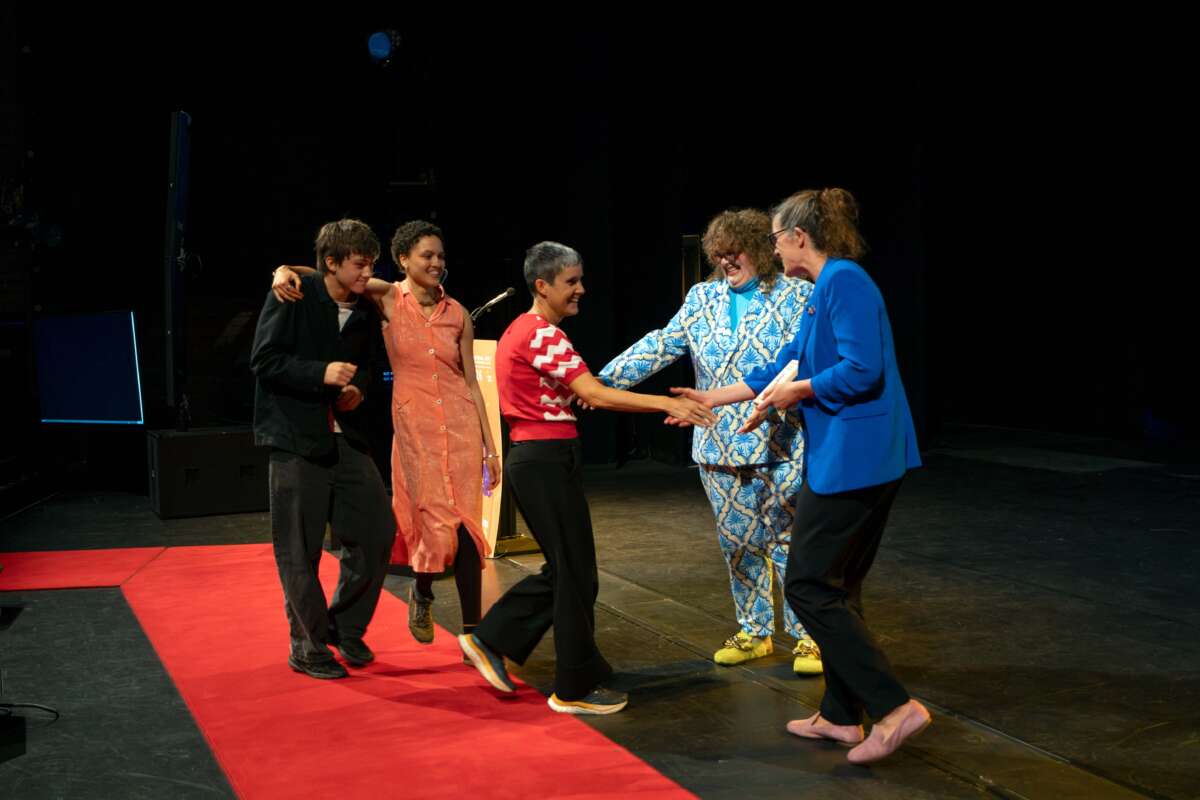
Image credit: Bill Lam, Curious Minds
CLA COMMENT
This was an incredibly powerful event. This was the first time the Awards had gained reach across the UK, and there was a real energy and excitement in the room. Now that we have a government which is ambitious to revitalise Arts education, it felt like the right moment to have a new national ambition for these Awards.
For the industry, the Awards are a reminder of how much good practice already exists, often in small organisations and individual classrooms. For the winners, they bring recognition and visibility that can help secure partnerships, funding and support for the next stage of their work.
The Mayor of Manchester spoke at the event and provided a real endorsement of the work of all the Award entrants, setting it in a political and social context – this work is important in building community, developing local identity, and in bringing people together. And it was a reminder that in all the focus on Arts education delivery, we maybe don’t take enough time to celebrate the achievements of our sector. We can’t wait for the next Awards!